Collecting Tips – The Awkward Inbetween Steps

Written by Nancy Miorelli

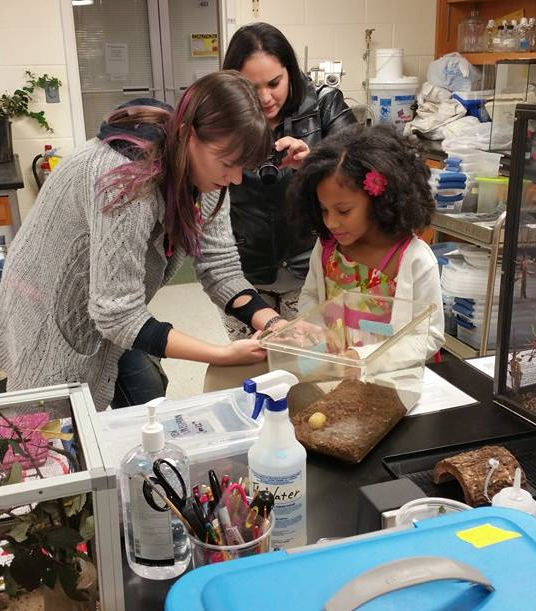
The internet is chock-full of advice for collecting and if you’re looking to build an insect collection but can’t take a formal class, there’s lots of available help.

I myself, have a YouTube series dedicated to helping budding entomologists put together their first collections.

But there are always those awkward middle steps that seem to be left out of the conservation. I don’t think anyone means to, it’s just we’ve all found our methods that we like the best. However, for someone just starting out, those steps can be really important. Since it’s almost spring here, and people might want to start collecting, I thought this would be a good time to write about this.

I received this series of questions asking about all those bits that aren’t usually mentioned in collecting tutorials.

These are all really great q's

These are all really great questions that are usually not specifically expressed.

Before we get started, insect collections are used for many purposes including outreach and research. I won’t be discussing the reasons for insect collections in this article, only how to do it. If you’re interested in why entomologists kill insects, you can read one of our previous articles here.

Continue reading

Posted in Taxonomy | Tagged , , , , , , , , , , | 42 Comments

How Would One Go About Raising Cicadas in Captivity?

Written by Joe Ballenger

Trevor Knight

Today’s question comes from Trevor Knight, via our Facebook page. He wants to know if it’s possible to rear cicadas in captivity. It’s a good question, and one I’ve been curious about myself.

Insect rearing is something that’s deceptively difficult. There are lots of insects which are in the pet trade, but these are fairly easy insects to rear for a number of reasons. Some, like crickets, cockroaches, and mealworms, eat stuff that’s already in the houses of most people. Others, like tarantulas, mantids and assassin bugs, eat things which can be easily procured from stores.

Unfortunately, cicadas probably don’t fit into the easy category. However, I think a persistent and disciplined keeper would be able to rig something up.

Continue reading

Posted in Behavior, Ecology, Education, Physiology, Research | Tagged , , , | 9 Comments

What Do Bugs Do When It Rains?

Written by Nancy Miorelli

It’s been raining here for the past week and a half. I feel like I should have invested in an ark instead of a new computer.

And if you think I’m exaggerating (okay, but only slightly) we’ve gotten 5.57 inches of rain in the past week and a half and 6.79 inches during the month of April. Average rainfall for Athens in April is about 3.2 inches.. So yeah, it’s been wet.

So with the imminent next big flood, one of my students asked what bugs do in the rain. I thought this was nice since most people ask about birds; although there is no shortage of curiosity when it comes to their insect counterparts.

Q -Where do they go

This is an important question as the cold temperatures can slow insects down, the water droplets add weigh to the insects and can make their wings stick together. Furthermore, high winds can easily push insects off course and they may have to expend more energy to stay on track. So to answer this we’ll have to consider a couple things.

  1. That bugs are exothermic (cold blooded)
  2. Their preferences and behaviors.
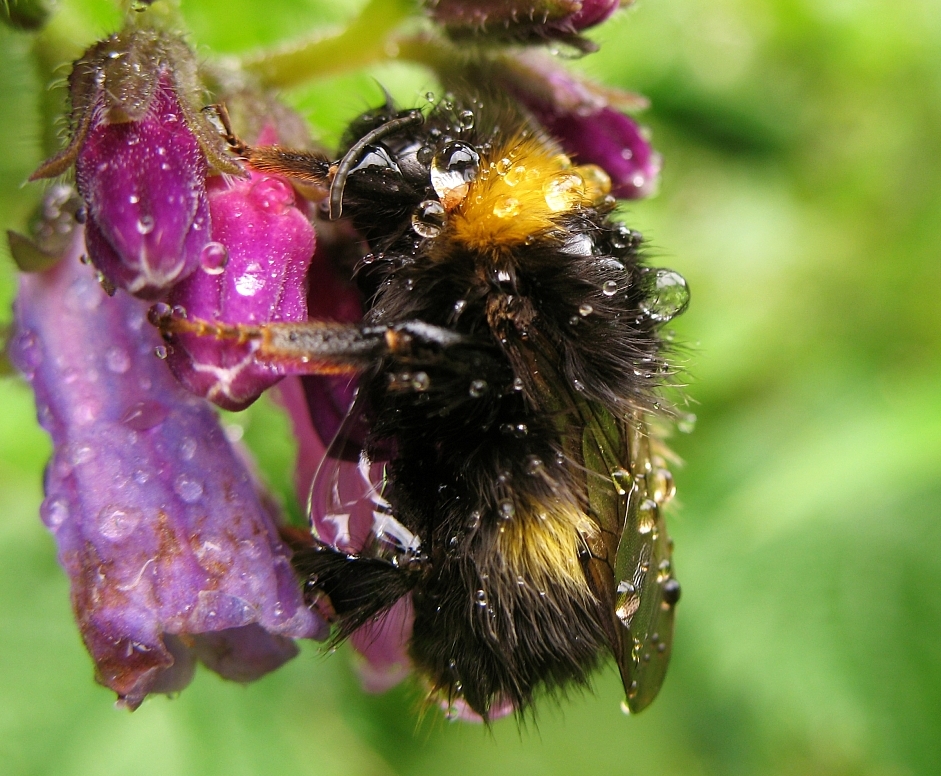
I'm cold. And wet. And I'm just gonna chill here until I dry out a little. PC: Nutmeg66 (CC by NC ND 2.0)

I’m cold. And wet. And I’m just gonna chill here until I dry out a little. Meh.
PC: Nutmeg66 (CC by NC ND 2.0)

Continue reading

Posted in Behavior, Physiology | Tagged , , , , , , | 10 Comments

Can Arachnids Regenerate Blood Lost After an Injury?

Written by Joe Ballenger

Just as knowing what to do in an emergency is important, understanding how invertebrate pets recover from injuries is important. Invertebrates are different than mammals in many ways, and wound healing is no different. Katzider’s second question, embedded above, asked whether invertebrates can regenerate blood. It turns out that for them, that’s the easy part. It’s stopping the flow that’s the hard part…

Continue reading

Posted in Physiology | Tagged , , , , , , | 2 Comments

When a Spider Loses a Leg, Does Its Whole Hydraulic System Lose Pressure?

Written by Joe Ballenger

This question came to us from Twitter, from user Katzider. It’s an excellent question for many reasons, not the least of which is because it’s about pet spiders. During our podcast with Mythwits, I expressed a little annoyance at the fact that there’s very little medical care for invertebrate pets and livestock. There are some very good economic reasons for this, but ultimately spider keepers are kind of on their own when it comes for veterinary care. Since spiders are popular pets, I think the questions Katzider sent to us are a great set of questions to focus on this week.

Before we jump into the meat of his question, we have to describe how spiders move and respond to injury. After that we’ll explain how a loss of fluid would affect movement, and discuss what precautions can be taken to save injured spiders.

For that last part, we’ll get to meet a brave little spider named Bob. But first…

Continue reading

Posted in Education, Physiology | Tagged , , , , , , , , , | 7 Comments

Birds, Cows, Hens, and Bugs – Things the Ladybug is Not: Why Are Ladybugs Called Ladybugs?

Written by Nancy Miorelli

One of the questions that I’ve seen on Twitter and on Instagram is why is the ladybug called a “ladybug” or a “ladybird” if you’re in the UK. These names are especially confusing because it’s obviously not a bird but more confusingly is not a “bug” either. It’s a beetle, in the family Coccinellidae.

Seriously - who's responsible for this?  PC: Gilles San Martin (CC by SA 2.0)

Seriously – who’s responsible for this?
PC: Gilles San Martin (CC by SA 2.0)
Edited by Nancy Miorelli

Continue reading

Posted in Culture, Taxonomy | Tagged , , , , , | 9 Comments

Everything You Wanted to Know About Colony Collapse Disorder.

Written by Joe Ballenger

Today’s post is a little bit different than our other posts, mostly because we’re doing it on a podcast instead of text.

A few months ago, we got a question from Peter Bryant of the Mythwits podcast about CCD. The conversation progressed, and I thought this would be a good chance to do something different and fun. So in lieu of a text post, I decided to do the podcast.

I’ve written about CCD online before, for the sustainability website Biofortified. You can read these posts here, here and here. So if you want to read these posts before hand feel free, although this is not required by any means to understand what the podcast will cover.

The podcast is normally geared towards adults, but a lot of the crass humor is going to be reined in for this particular discussion. We typically write this blog at a middle-school reading level, although this does vary depending on topic. So far as possible, we do try to keep things family friendly.

The first hour will talk about CCD, and after that we’ll talk about some of our interests which don’t revolve around science. So if you want to know what scientists are like outside of work, that will be a good opportunity.

Full disclosure: I work for a contracting agency on assignment at Monsanto, which is a large agricultural company that is currently working on some bee health projects. You can read about the specifics of those projects here. I’m not directly involved with these projects, but I am under some non-disclosure agreements which prevent me from saying anything about those projects that isn’t covered by the website. I do not write this blog on behalf of Monsanto, and will not be doing this podcast on their behalf. As with all other posts, any opinions expressed are mine and mine alone…and may or may not reflect the opinions of anyone I’m affiliated with.

Unfortunately, Nancy couldn’t attend due to a schedule conflict. I will be doing this podcast with a guest, Doug Yanega who is an entomologist from UC Riverside. Doug is a taxonomist who studies bees, and is extremely knowledgeable about insect biology. He’s written about CCD at Bug Girl’s Blog, and maintains a personal website here.

So hopefully, between my contributions and Dr. Yanega’s contributions we’ll have a good discussion that covers this issue from a variety of perspectives.

Posted in Culture, Education, News, Physiology, Pollination, Research | Tagged , , , , , , , , , , , , | 1 Comment

Exciting Stuff! New Directions for Ask an Entomologist

Post written by Nancy Miorelli and Joe Ballenger

As Ask an Entomologist has grown, we’re excited to have had a few opportunities to collaborate with some really cool people. Nancy and Joe wanted to make a post to cue folks into some of these opportunities.

1)CCD Podcast

Joe, along with a friend of his, will be doing the MythWits podcast on April 6th. The topic will be about CCD, which he’s written extensively about on other websites…namely Biofortified. You can read what he’s written in the past here, here and here.

Joining Joe will be Doug Yanega, a senior Museum Scientist at UC Riverside who studies bees. You can read what he’s written on the topic here.

What’s the buzz on bees?
Find out April 6th!
PC: Michael Palmer (CC by SA 4.0)

2) Question of the Month

We’re pleased to announce a Question of the Month contest, which we’re running in conjunction with Entomology Today. Entomology Today is the official blog of the Entomological Society of America, of which both Nancy and Joe are members.

Once a month, we’ll choose a question we think is particularly interesting and the answer will appear in Entomology Today a week before it appears on this blog. It’s a pretty cool opportunity, and one we hope will bring broader exposure to our mission with this site.

3) #KidQuestions

We’ve had a lot of questions about insects from parents and teachers. A lot of these questions are really good, so we would like to do another theme month for the month of May to focus on these questions. The posts in May will center around questions asked by kids, which we’ll call #kidquestions.

If your kid has a question about insects, simply contact us and mention the kid’s age. As always, we’ll respect any requests for anonymity.

Ask your kids! Ask your students! Ask your friends kids what they want to know about bugs! #KidsQuestions

Ask your kids! Ask your students! Ask your friends kids what they want to know about bugs! #KidsQuestions

4)Bug Pics on Instagram

We’ve set up an instagram account at BugQuestions, where we’ll take pictures of bugs wherever we are! Follow us to get the lowdown on some awesome bugs and behaviors. We’ll probably end up answering questions there too depending on the nature of the question.

Follow us to get lots of bug pictures!

Follow us to get lots of bug pictures!

Thanks!!

So we hope that you guys are as excited as we are for the opportunity to expand beyond our site. We’re always working on new stuff, and when stuff outside of AaE comes up…we’ll post an announcement on the blog!

We’re totally open to suggestions too so continue to email, tweet, and tag us! We’re only possible because of you and we appreciate all your involvement and support!
Posted in News | Tagged , , , , , | 4 Comments

The perfect April Fool’s day post: What’s going on in this video?

In our email on Monday, we received a message from Mike Menefee with a link to this video:

I witnessed (and videoed) an interesting interaction today between a wasp and a fly.  They seemed to be working together in some fashion.  Here is a link to the video (only a 46 seconds long).  Can you help me identify the relationship… what is going on here?

The video shows a particularly interesting sort of parasitism, one which I think is perfect for a post appearing on April 1st. That fly is a special kind of parasite. Instead of burrowing into the wasp’s larvae, it steals the food the wasp is provisioning for it’s babies. This relationship is known as kleptoparasitism.

So, today’s post is going to focus on this very special form of trickery. In particular, I’m going to talk about:

  1. What is kleptoparasitism?
  2. What sort of relationship do the fly and wasp have?
  3. How do kleptoparasites adapt to this sort of lifestyle?

Continue reading

Posted in Behavior, Ecology, Physiology | Tagged , , , , , , , , , , | Leave a comment

The Last of the March Mantids: High School Steroptypes!

Written by Nancy Miorelli and Joe Ballenger

It’s the end of the month, and our March Mantids theme month seems to have been a pretty big success. It was a lot of fun for us, because we got to talk a lot about people’s favorite bugs.

So to end it, we decided to showcase some of our favorite mantids as if they were high school stereotypes.

Prom King and Queen: Conehead Mantis (Empusa pennata)

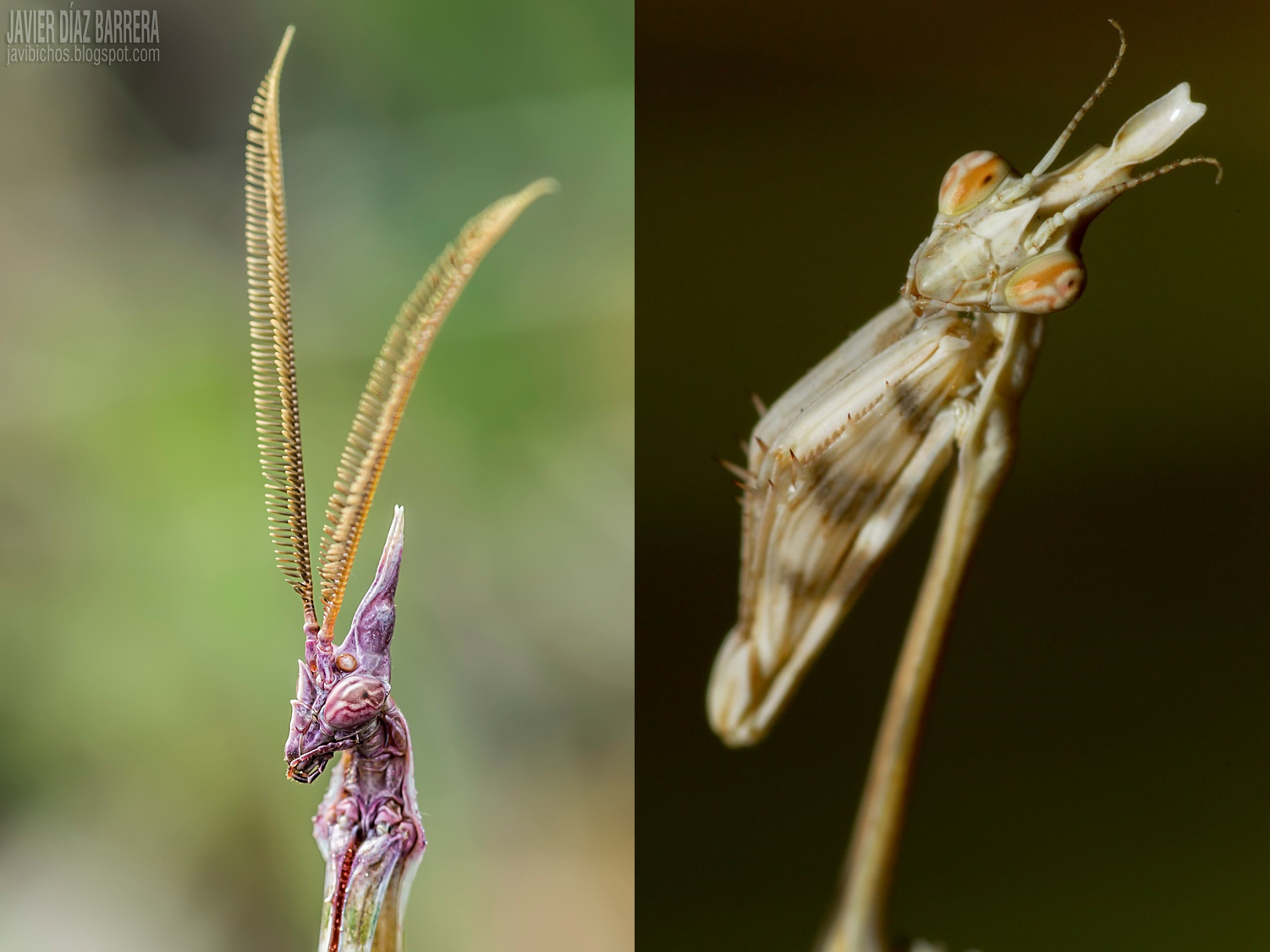
Conehead Mantises PC: Javier Díaz Barrera (CC by NC ND 2.0) Frupus (CC by NC 2.0)

Conehead Mantises – Male on left and female on the right.
PC: Javier Díaz Barrera (CC by NC ND 2.0)
Frupus (CC by NC 2.0)

Conehead mantises  have headdresses fit for royalty. The male has feathery antennae to help smell the female’s pheromones from long distances.

Read more to see the rest of our list!

Continue reading

Posted in Behavior, Culture, Ecology | Tagged , | Leave a comment