Symbionts in insects part 1: What do they do?

This is a question we received a very long time ago, and I’ve been looking for a way to work it into a current event. I think the recent discovery of plastic eating symbiotes in two insects gives a good way to introduce this topic. The papers are very complicated, but the implications are pretty simple…some insects may be able to digest plastic with the aid of the bacteria which live in their guts.

Image highlighting the acarinarium, a built-in mite purse used by some solitary wasps. Image credit: Cotinis, via BugGuide.net License info: CC-BY-ND-NC-1.0

Image highlighting the acarinarium, a built-in mite purse used by some solitary wasps.
Image credit: Cotinis, via BugGuide.net
License info: CC-BY-ND-NC-1.0

It’s a question that’s actually a lot more important than it looks, because Jim is asking about a group of animals that are often overlooked because their effects on the biology of their hosts are not always obvious.

Usually when we write about insects, we write about them as a single organisms. This, however, is not necessarily accurate because any bug you pick up is actually a composite of dozens (maybe hundreds) of organisms. Some of these are commensals, others parasites, but quite a few of them are working with the insects towards a common interest. These are termed symbiotes.

The most common symbiotes are bacteria, but a lot of critters work together in surprising ways. Fungi, other animals…even viruses are all really common symbiotes of insects. Although Jimmy was asking about bacteria specifically, I’m not sure a discussion of insect symbionts would really be complete without talking about these examples.

So let’s discuss what symbiotes do in this post, and in the next post we’ll talk about why they’re important.
Continue reading

Posted in Chemistry, Ecology, Physiology | Tagged , , , | Leave a comment

How do I relocate insects and spiders?

This is actually one of the more common questions we get, and it’s a pretty difficult one to answer because every situation is different.

Insects can get themselves into a lot of awkward situations, and I can totally relate to that because I get myself into a lot of awkward situations. A lot of people would prefer to move the bugs, rather than kill them outright. In most cases, I agree with that wholeheartedly…and I’m totally willing to help people with that.

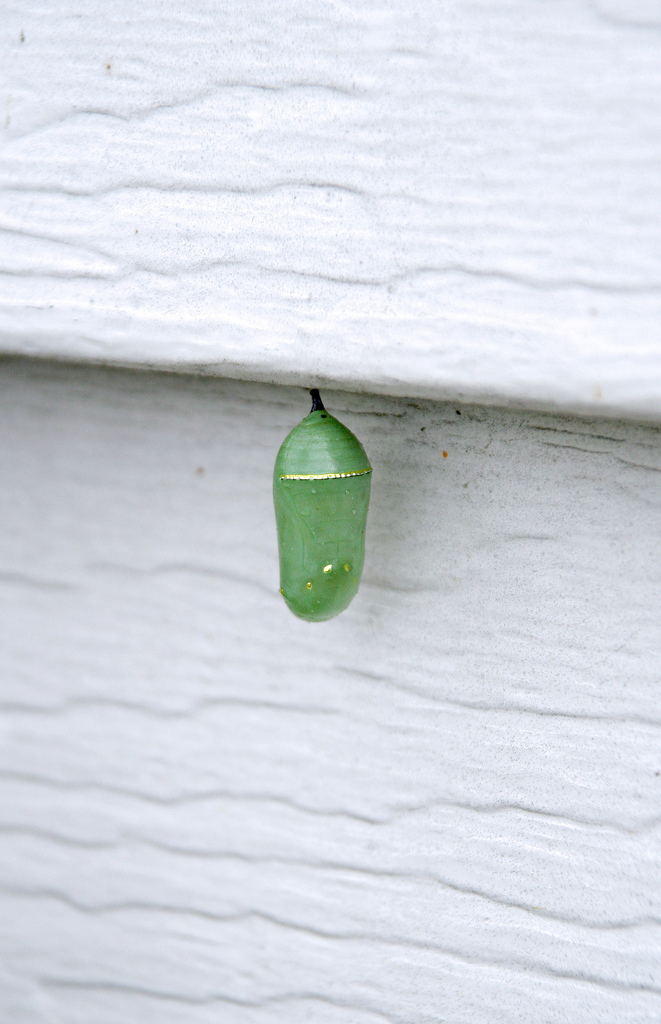
If this homeowner wanted to replace their siding, this could be a bad situation for this developing butterfly. Image Credit: McBeth License info: CC BY-NC-ND 2.0

If this homeowner wanted to replace their siding, this could be a bad situation for this developing butterfly.
Image Credit: McBeth
License info: CC BY-NC-ND 2.0

So, if you want to move a bug outdoors…here are a few things to consider.

Continue reading

Posted in Culture, Education, Insect Rearing, Pest Management | Tagged , , , | 6 Comments

Why are woolly apple aphids flying around everywhere?

Although we don’t think of ourselves as an insect ID blog, some of these requests give us some great opportunities to talk about stuff that’s happening seasonally. Fall is an important time for bugs, because they’re finishing up their lifecycles for the year and are preparing to hunker down for the winter.

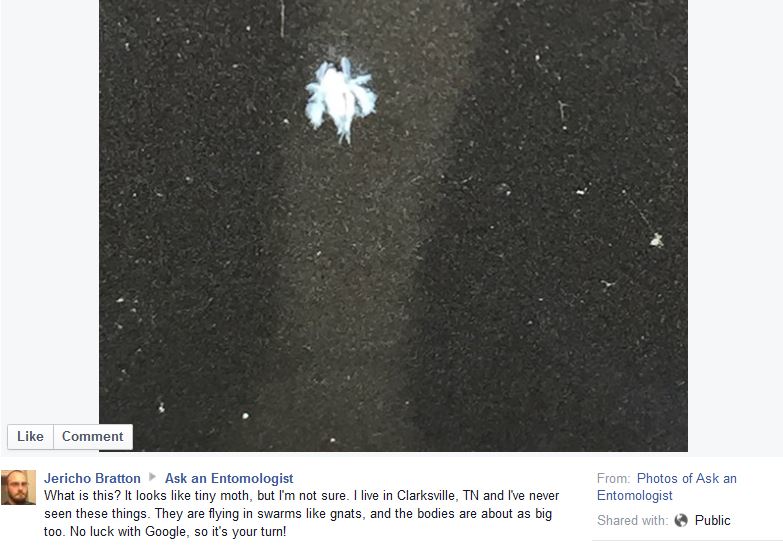
We’ve gotten some folks asking about wispy flying insects that resemble flying cotton balls.

Your Name: Jim

Your Bug Question: The air here is filled with tiny white bugs. They look like tiny wisps of cotton. No bigger than a pin head. They are innumerable. What are they?  Nashville Tn.

Wooly apple aphid FB

These are woolly apple aphids, which are pests of fruit trees. They typically feed on pome fruits, apples and pears, but also feed on the crabapples that people grow in their yards. Because they feed on common yard plants, everybody sees them about this time of year.

They look like cotton balls because they’re covered in a waxy coating which serves quite a few purposes. It’s waterproof, so it repels the liquid waste that can accumulate underneath aphid colonies…basically shielding the aphids on the lower branches from the poop which falls from aphids on the upper branches. It might also protect them from frost, keep parasitic fungus from contacting the cuticle and infecting the aphid, protect it from predators, or even act act as a kind of fur coat.

We’re not actually entirely sure what they use the wax for. It’s probably a multipurpose survival coat.

…but we do know why they’re flying around at this time of year.

Continue reading

Posted in Behavior | Tagged , , , | 1 Comment

Please stop sharing the ‘wasps are jerks’ memes.

I really try not to use this blog to jump on the soap-box too often but for some reason the internet has decided that wasps are the Martin Shkrelis of the insect world, and I think this needs to stop.

Typical examples of 'wasps are jerks memes'. The picture on the left was originally posted here in 2011, while the picture on the right is a product of Henry Kane farms, a humor site.

Typical examples of ‘wasps are jerks memes’. The picture on the left was originally posted here in 2011, while the picture on the right is a product of Henry Kane farms, a humor site.

From a mechanistic standpoint, this joke is really just lazy and uncreative. Jokes typically incorporate some element of tragedy, preceded by a misleading setup. In this case the setup is a scientific looking chart, followed by a statement telling you that hating this particular animal is OK because…well, it’s not a bee.

The standard defense of these memes is that they’re just harmless humor, and I reject that completely. As we’ve learned from The Daily Show and Last Week Tonight, humor is something which is actually taken pretty seriously, and people tend to joke about stuff they already kind of believe.

There are also examples of jokes which took on a life of their own, and end up hurting people. The best example of which is from the 2004 movie Sideways. The main joke of the movie, that Miles (played by Paul Giamatti) hates merlot, is actually meant as a criticism of the wine industry. His prized possession is a bottle of 1961 Cheval Blanc, which is a wine blend made with 41% merlot grapes. Unfortunately, this joke went over the audience’s heads and sales of Merlot wound up plummeting which hurt a lot of grape growers.

Also, people take the ‘Kill it with fire‘ idea waaaay too seriously. Dozens of fires are started every year by people attempting to kill insects and spiders with fire. So again, jokes can have real consequences.

So let’s talk about all the reasons this meme is terrible, and why it needs to go away yesterday.

Continue reading

Posted in Education | Tagged , , , , | 26 Comments

Why can’t male bees (or wasps) sting?

This question came to us over Twitter, and given my recent post about bee genetics I thought it was worth a discussion because it allows us to further explore the evolution of bees, wasps and ants. This question can be answered pretty well in less than 140 characters, but I feel like that answer leaves out a lot of interesting stuff.

The short answer is this: Early in the bee/wasp evolutionary history, female wasps needed to lay their eggs inside stuff. This required pretty extensive modification of certain structures, and males had no need for this because they don’t lay eggs. Since evolution is usually pretty economical, development tends not to waste energy on large and unwieldy structures which aren’t needed.

So let’s explore how different groups of wasps use their venom, and how male wasps defend themselves without this very important weapon.

Also, as an editorial note, this post contains some NSFW pictures of bug junk…so it might not be the most family-friendly post we’ve ever written.

Continue reading

Posted in Developmental Biology, Evolution, Physiology | Tagged , , , , , , | 3 Comments

Why are cicadas showing up dead on my porch?

We get a lot of letters in our inbox, and some of my favorite inquiries are ID requests where someone also notices something interesting going on.

Here’s an example of one such question:

Your Name: Becky Boots
Your Bug Question: I witnessed a Locust emerge from the ground on the 4th of July and then shed watched as it shed its exoskeleton….I took pictures….it was a very bright fluorescent green….now, every night at least one if not two seem to migrate back to my front porch, where there is a light, seemingly to go belly up and die….only now they are a dark green and black camouflage pattern with white undersides….I read a little, but cant figure out what kind they are? I live in Iowa!

Boots cicada

Picture credit: Becky Boots

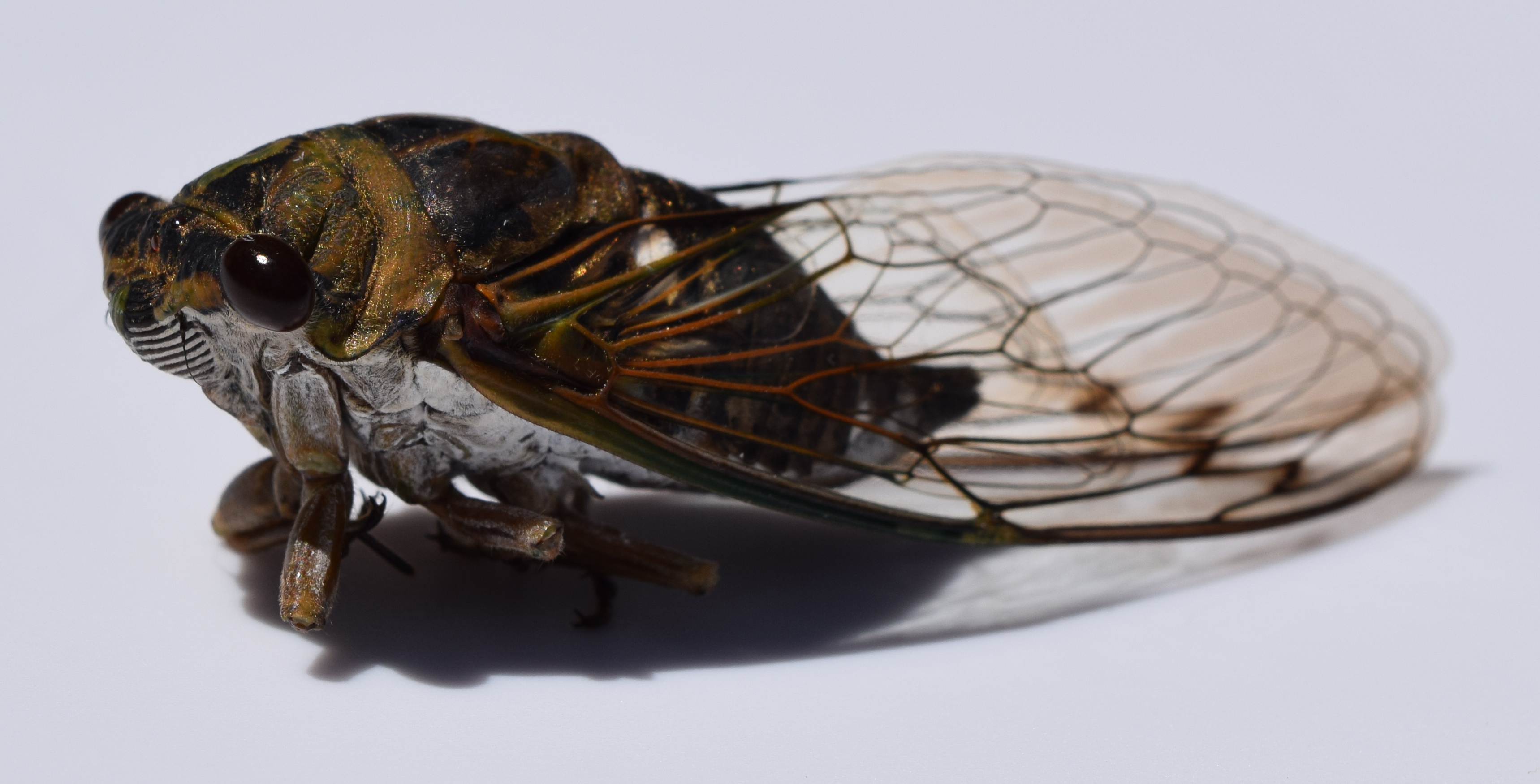
This ID request is actually pretty easy for me, because I grew up in Iowa. In Iowa, the most common cicadas are Tibicen species. They grow underground for a couple years, and there’s a generation every summer. When they emerge, they’re a very pretty lime green and then harden into a camouflage coloration.

The molting process of the cicada is a really popular subject for YouTube videos. There’s all sorts of timelapse videos and animated GIFs showing both the process of molting and coloration just after emergence.

It’s an oddly specific internet fascination, but I happen to like it because I think newly molted cicadas have spectacular coloration. Here’s what this specimen would probably look like after it’s shell hardened and it’s colors developed:

Picture Credit: Fredlyfish4, via Flikr License info: CC BY-SA 2.0

Picture Credit: Fredlyfish4, via Flikr
License info: CC BY-SA 2.0

So the cicadas Becky is seeing are most likely Tibicen cicadas. The description is rough, but this genus is very common…so I feel pretty confident about that ID even without a picture.

There’s another interesting thing going on here, though…because there are also some dead cicadas on her porch.

So what’s up with those cicadas?

Continue reading

Posted in Behavior, Ecology, Physiology | Tagged , | 3 Comments

Mosquitoes love cheese! Here’s why.

Aedes cheese post

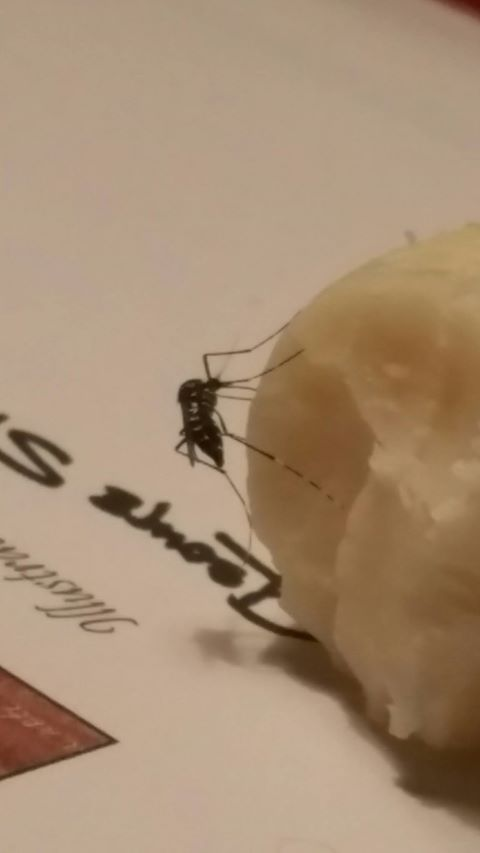
Picture Credit: Pamela Monks Almedia, via The Entomology Group

Picture Credit: Pamela Monks Almedia, via The Entomology Group

This week’s post is not a direct user submission, but it’s a picture that’s so neat that I wanted to highlight it with it’s own blog post.

The picture is pretty self-explanatory. It’s a picture of a mosquito attempting to feed on cheese, which is definitely not a natural food. Mosquitoes are pretty well adapted to a liquid diet, specifically blood. We’ve talked about how they keep their host’s blood from clotting, but less about how they find their hosts.

Mosquitoes can’t obtain any nutrition from cheese because their saliva is highly adapted to keep blood from solidifying, and can’t really break clots up once they form. So this mosquito is just probing the cheese, looking for a vein.

So what’s going on here, and why do I think this picture is really neat?

Continue reading

Posted in Behavior, Ecology | Tagged , , , , , | 1 Comment

What did these wasps manage to get themselves stuck in?

Mystery goo

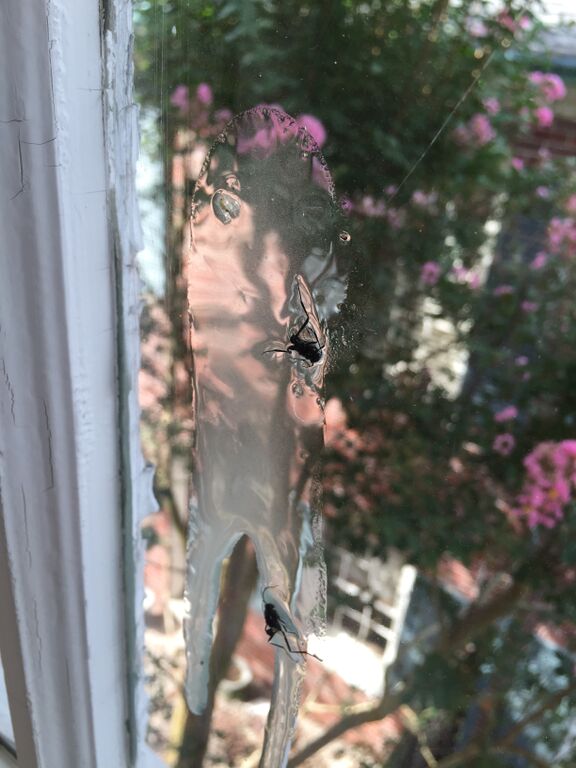
Picture credit: Mathilde Montgomery, via the AAE inbox.

We get a lot of neat pictures in our inbox, and I think this is one of the cooler images we’ve gotten because there’s a lot going on in this picture.

I’m not 100% certain of what the wasps are stuck in, although I do have a pretty good idea. In fact, I’m more confident about the ID of the wasps than I am the substance they’re stuck in.

So…what’s going on in the picture?
Continue reading

Posted in Chemistry, Ecology, Education, Taxonomy | Tagged , , , , | Leave a comment

Stink bugs: Telling the good ones from the bad ones.

At about this time of year I expect to start getting a lot of questions about the Brown Marmorated Stink Bug, or the BMSB as I like to call it. It’s an introduced stink bug from Asia, which has quickly spread across the US and has become a pest of agriculture, gardens and households. Because they’re not native, they don’t have a whole lot of predators and parasitoids which keep them in check in their native environment.

Much like the Multicolored Asian ladybeetle, these guys look for places to overwinter. Much like the Multicolored Asian ladybeetle, these guys also like to hibernate in houses. As a result, they get everywhere in huge numbers. So there’s a lot of people who go out and spray for them around their houses.

I’ve seen some discussions online, mainly through Facebook groups I’m a part of, about spraying for stink bugs in the garden. Unfortunately,  it’s not uncommon to see pictures of predatory stink bugs posted while discussing the invasives. To be fair, the more common predator Podisus does actually look very similar to the BMSB. So the mistake is understandable, but spraying these guys would remove some of the predators from the garden which would keep the pest population down.

So I thought it would be a good idea to get some resources out there for gardeners to help ID their stink bugs.

First, here’s a comparison of the predatory Spined Soldier bug and the BMSB. The feature I use, the proboscis, is on the underside of the insect. All predatory stink bugs have a thick proboscis they use to kill their prey, a lot like assassin bugs. So it’s a really good clue to quickly know if you’re looking at a good stink bug, or a bad one.

However, a lot of people might not be comfortable picking them up. That’s OK…Entomophobia is definitely something I understand. In that case, you can also use the spines and colors to tell these insects apart. The predatory stink bugs have sharp spines, whereas BMSB has dull spines. The BMSB also has white bands on their antennae, which are absent from the predatory ones.

Stink bug ID corrected

This is mostly meant as a two-second field guide for telling apart the most common predator from the most common pest. Stink bugs are a really diverse group, and this isn’t meant to help you tell them all apart. Thankfully, Virginia Tech has a really nice and accessible key which gardeners can use to tell these guys apart.

Correction 8/31/15 10:00 PM: An earlier version of this image featured a misidentified Euschistus sp. as a Podisus.

Posted in Culture, Ecology, Education, News, Pest Management | Tagged , , , | 9 Comments

I saw some roaches dancing. What are they doing?

Awhile back, we received an astute question from Tabitha who found some cockroaches acting really weird.

Your Name: Tabitha
Your message: Hey there!
I work in an office by a beautiful flowing creek. Every time it rains, brown roaches come to visit. This is in the Dallas, TX area. Well….this morning…I was making an effort to get rid of the dead roaches that are in our office every time it rains…and I came upon a weird posture in a roach. It was standing up, wings spread…I didn’t take a close look before I vacuumed the sucker up. Sorry, there is no love lost here. Why would they stand up like that? Could there have been two of them? were they mating or something?

As Tabitha correctly noted, this is actually a pretty good description of cockroach mating.

Continue reading

Posted in Behavior, Chemistry, Pest Management, Physiology | Tagged , , | 2 Comments