Written by Joe Ballenger

People are really curious about these mosquitoes…and we’re really excited to get the opportunity to talk about how new technology can improve lives!
People have asked Nancy and me a lot of questions about the sterile GMO mosquitoes the British company Oxitec is planning to release in Florida. We get these questions on a Facebook page we administrate as well as through this blog. People are really curious about what’s going on with these mosquitoes, and we’re really excited to talk about them!
It’s important to note that this release isn’t set in stone. The Florida Keys Mosquito Association has been pushing for these releases, but they can only happen if the FDA bestows their blessings upon the company to do this.
Who is being sterilized, and why?
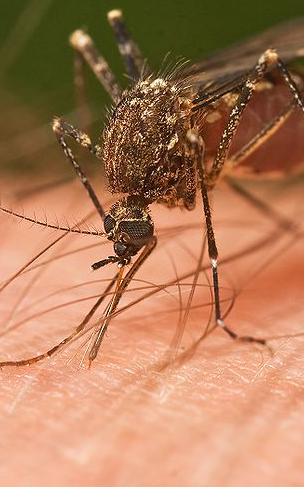
Across the south, the most commonly encountered mosquitoes are potentially devastating disease vectors. The Yellow Fever Mosquito (YFM), Aedes aegypti, is a non-native species that was introduced with the arrival of European settlers. Aedes albopictus, the Asian Tiger Mosquito (ATM), was introduced in the 1990s. These mosquitoes are really common in urban and suburban areas where their food source…humans…are easily found. Unfortunately, they don’t belong here so nothing else even considers them to be food, leaving us with an explosive population. Besides rudely interrupting dinner parties, these mosquitoes vector a lot of nasty and debilitating diseases like Dengue and, as Lindsay Lohan can tell you, Chikungunya.
Mosquitoes, while they all kind of look the same, are really quite different. Just as you don’t see a cat mating with a dog, different species of mosquitoes cannot mate with each other. This is really great, because this means that the sterilization technique employed by Oxitec can only affect the Yellow Fever Mosquito (YFM) it’s intended to fight.
Because the Ae. aegypti (YFM) and Ae. albopictus (ATM) don’t belong here, there are no species which depend on this animal for food. They are also highly dangerous because they spread diseases which are highly debilitating and more or less incurable. This sterilization technique should be viewed as a good thing as it’s meant to replace frequent pesticide spraying in places where there are lots of people.
Instead, we get a lot of questions about this topic is because it’s highly controversial. We also see a lot of pushback, cynicism, and incredulous questioning because it’s a new technology people think is kind of scary. There’s also a lot of misinformation spread by special interest groups groups, and the media isn’t exactly helping the situation. In fact, the scientific journal Nature even published an article which implied the objective of vector control techniques was the elimination of all mosquitoes on their news site.
It would be very difficult to find every article, and correct every myth about these mosquitoes…but I’ll do what I can. I’ve tried it before, and it turns out to be too much to do in one article.
Instead, I’m going to focus on the main question here:
Why is a transgenic approach superior to the current ways used to control this mosquito?
Continue reading →












You must be logged in to post a comment.